
Managing World Cup Traffic at the Intersection Level in Arlington
CASE STUDY | December 2025 - (Est.) September 2026
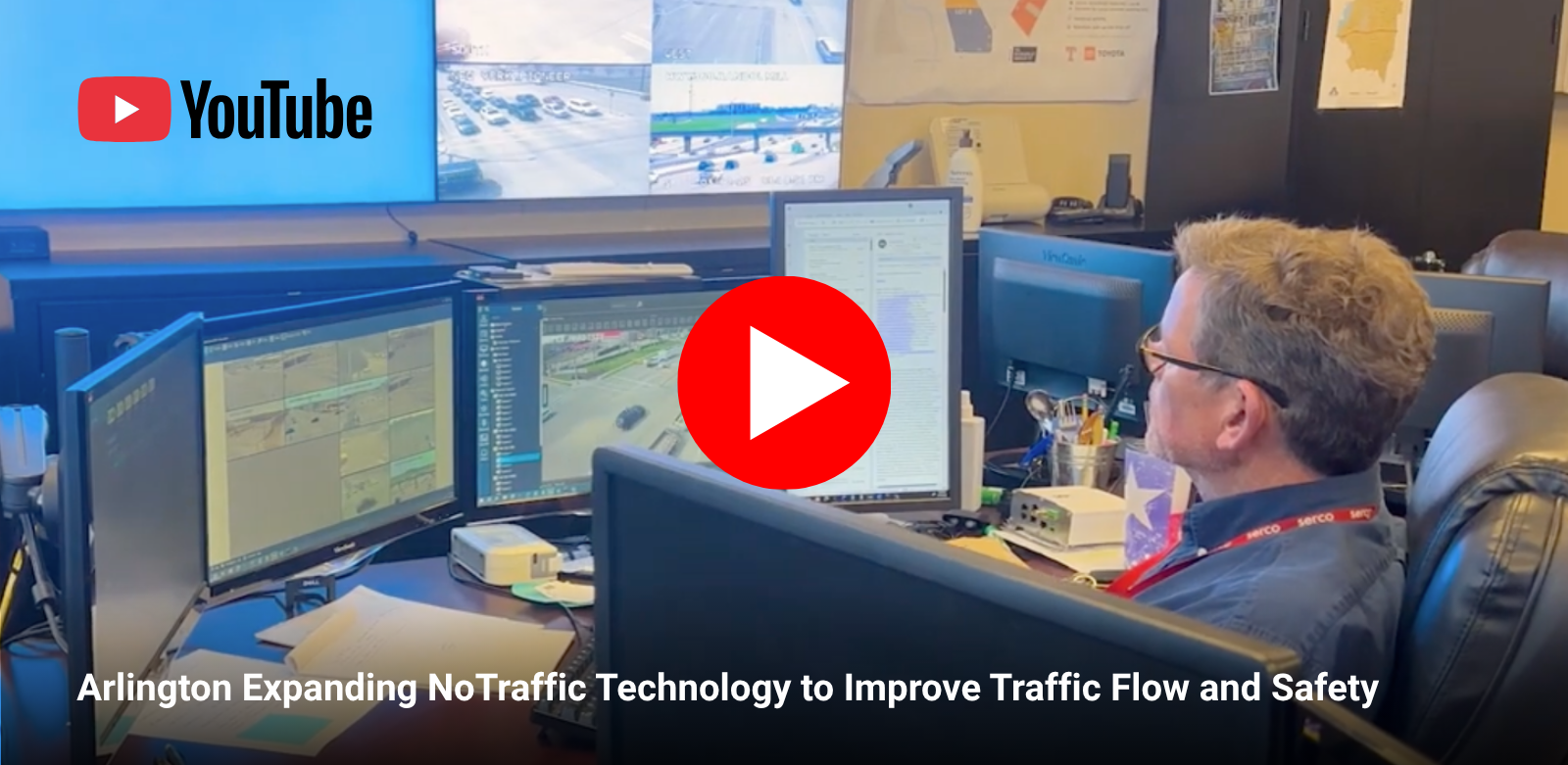
During the 2026 World Cup, Arlington used NoTraffic’s video- and radar-based platform, which had been installed throughout the Entertainment District at the end of 2025. Post-tournament reporting described an active deployment covering about 30 intersections around AT&T Stadium. Arlington’s earlier expansion plan called for NoTraffic technology at 40 Entertainment District intersections by 2026.[2][3]
A stadium district does not operate like a normal weekday corridor.
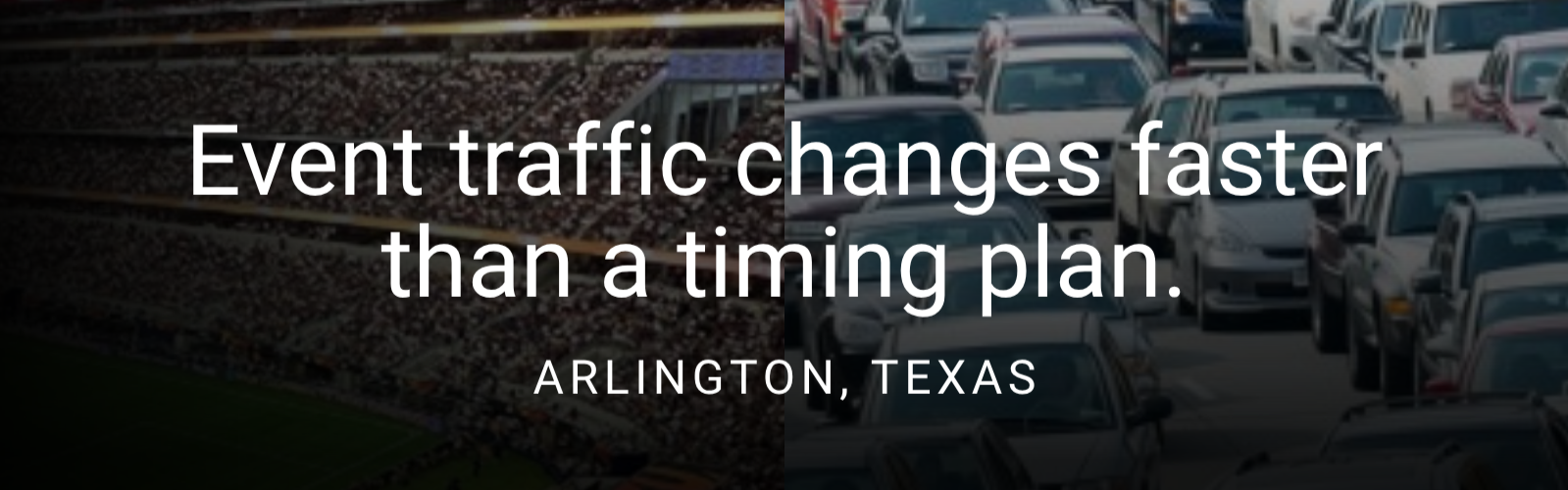
That was the operating environment around AT&T Stadium during the 2026 FIFA World Cup. Managing historically crowded game days required more than a single timing plan or additional officers at a few critical intersections. Arlington needed current information about which road users were approaching each signal.
Event Traffic Changes Faster Than a Timing Plan
Special-event timing plans remain an important part of traffic operations. Engineers can prepare ingress and egress plans, adjust splits and offsets, establish preferred routes, and coordinate traffic control with local law enforcement. Their limitation is how quickly actual field conditions can depart from the assumptions used to build them.
A delayed kickoff, a full parking lot, or a temporary road closure can force drivers onto the approach of least resistance. Pedestrian releases may interrupt vehicle progression longer than expected. A queue on one approach can spill back into an upstream intersection while another movement remains underused.
Fixed-time operations cannot see those changes. Conventional actuation provides some local response, but the traffic signal controller still depends on the quality and extent of the detection information it receives.
The distinction matters. The 40-intersection figure reflects the City’s planned Entertainment District deployment. The approximately 30-intersection figure reflects public reporting about the system used around the stadium during the tournament.
Detection Was the Foundation of the Response
The NoTraffic system classified road users by type, including vehicles, cyclists, and pedestrians. That information gave the traffic operations team a current picture of demand on each approach rather than requiring it to rely only on historical counts or the expected event schedule. Public reporting stated that the platform successfully adjusted signal timing in real time based on detected conditions.[2][3]
Why does detection affect timing so much? Reliable vehicle and pedestrian detection gives the controller and the operations team a basis for responding as demand moves through the district.
Pedestrian activity also becomes part of the operating picture. Around a stadium, pedestrian volumes do not build evenly throughout the hour. Groups may arrive from parking areas, shuttle unloading points, or rideshare zones within short intervals. Those movements affect turning traffic, pedestrian calls, and an intersection’s usable capacity. Detection records also give engineers a clearer picture of pedestrian demand and how the crossing is being used during the busiest periods.
NoTraffic Analytics
Arlington also used NoTraffic reporting to examine red-light-running activity. According to the City, weekly reports identified changes in red-light-running activity by location and time period. Arlington Police used that information when assigning officers to intersections identified as problem locations.[2]
Engineers can review arrivals during yellow, queues held at red, and changes in road-user activity across different operating periods. Law enforcement can concentrate personnel at locations where the data indicate a recurring problem rather than distributing officers based only on general observations.
During a multi-day event, the same information can support reviews between match days. Arlington did not face one isolated traffic surge. The City managed nine separate World Cup match days, each with its own arrival pattern, closures, transit activity, and pedestrian behavior.[1]
Texas Highway Products’ Role in the Arlington Deployment
Texas Highway Products assisted with the NoTraffic deployment at approximately 40 intersections near AT&T Stadium, Six Flags Over Texas, and the surrounding ballpark area.[6]
The field contribution centered on installing and supporting the intersection technology used within the Entertainment District. That work connected detection, controller operation, and real-time traffic information across a district where conditions could change from one cycle to the next.
THP did not replace the City’s traffic engineering judgment or event management plan. The deployment was an AI-based detection upgrade that gave Arlington’s engineers another level of intersection visibility within that plan.
The Broader Lesson for Event Districts
The World Cup placed unusual demand on Arlington, but the traffic engineering issue was not unique to an international tournament.
The same conditions appear around football games, concerts, state fairs, convention centers, and large university events. Demand changes direction quickly. Pedestrian activity interrupts normal progression. Parking operations shift traffic between approaches. Police control and temporary closures change the function of nearby intersections.
These environments expose the limitations of operating from expected demand alone. A strong event traffic plan still requires route planning, coordination, field personnel, and prepared timing strategies. Real-time detection adds the information needed to determine whether those strategies match current conditions.
The value lies in seeing the queue that develops on an unplanned approach, the pedestrian volume building between scheduled crossing periods, and the intersection where driver behavior requires additional attention.
Arlington’s World Cup operation showed what real-time intersection management looks like under concentrated demand. The technology mattered because it was connected to signal timing, engineering review, and field response.

References
FIFA. “Spain Beat France in Semi-Final Thriller to Conclude Dallas’ FIFA World Cup 2026.” July 15, 2026.
City of Arlington. “Arlington Expanding NoTraffic Technology to Improve Traffic Flow.” March 20, 2025.
Smart Cities Dive. “The World Cup Was a Transportation Stress Test. Cities Got an A-Plus.” July 21, 2026.
City of Arlington. “Arlington Invests in Infrastructure Improvements Ahead of World Cup.” June 9, 2026.
City of Arlington. “City of Arlington Prepares for FIFA World Cup 2026.” February 20, 2026.
Texas Highway Products. Internal project records and field documentation for the Arlington Entertainment District NoTraffic deployment, 2026.